 There’s a woman I know who has been trying for years to lose weight, mostly without too much success. Weight Watchers, Fit for Life, Atkin’s, exercise—you name it, she’s tried it.
“I’ve had it with these diets that don’t work for me!” she once complained to me. “You know what I really want to try—something that might actually get rid of the extra pounds?” Without waiting for my response, she went on, “Kinesiology. That’s what I want to try.”
Er, okay…now, what’s that?
Seeing my blank look, she explained that kinesiology is some kind of alternative therapy that helps pinpoint—and correct—certain imbalances in the body, which could go a long way toward figuring out why all of her diets weren’t working and what she could do differently in order to lose weight.
“Sounds good,” I told her. “So…why don’t you go for it?”
“I can’t,” she said. “My husband won’t let, because it might involve issurim of avodah zarah.”
Whoa. I was not going to argue with that one!
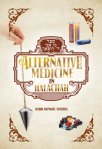
I thought of this conversation when I saw the new book released recently by Israel Bookshop, Alternative Medicine in Halachah, by Rabbi Raphael Szmerla. Unbeknownst to little me, there are a host of alternative therapies and practices in existence, all of which are said to restore healing for various maladies and medical conditions. In addition to kinesiology, there’s hands-on healing, acupuncture, dowsing, homeopathy and flower essences, geobiology and feng shui, hypnotherapy, and yoga, to name a few.
Problem is…like this woman’s husband feared, so many of these practices may seem to touch on extremely serious Torah prohibitions—we’re talking actual avodah zarah, kishuf, things like that! It’s a scary business… How is any frum Jew supposed to know whether or not he may avail himself of any alternative medicines, if the pitfalls are so dangerous and unknown?!
Ah, but the key word here is “unknown.” Until now that’s what all these alternative medicines and therapies were, by most halachic authorities—unknown. Who actually knew where homeopathy or acupuncture or kinesiology actually found their sources? Who really knew what feng shui is?
Now, with Alternative Medicine in Halachah out on the shelves, the hazy curtain shading these therapies and practices has been pulled, with the author, Rabbi Szmerla, doing the work for us. Rabbi Szmerla is an outstanding talmid chacham, former rosh kollel, and posek who has spent over three decades steeped in the deep waters of Gemara and halachah. For many years now, he has delved into the halachic issues surrounding the use of alternative therapies. To do so, he has personally studied some of these therapies in depth, in addition to having had close contact with many practitioners of different modalities for the past twenty-five years. Rather than relying on hearsay or dubious Internet research or magazine articles, he has made sure to obtain a first-hand, deep understanding of each alternative therapy before attempting to determine its halachic status.
The fifteen haskamos Rabbi Szmerla received for this book, from some of our most esteemed poskim in Eretz Yisrael, England, and America, are testaments to his integrity, scholarship, and yiras Shamayim.
After learning through this book, the reader will discover, as I did, that while some alternative medicines and practices are unequivocally permitted, some are permitted only under certain conditions, and some are categorically prohibited.
Next time I meet up with my kinesiology-interested acquaintance, I’ll know just where to guide her and her husband, so they can find out if perhaps this alternative therapy is something she can try out after all…
Click here to purchase online.


 Posted by anamericanjew
 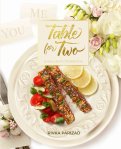 “I just made the S’mores Bars—they came out yuuuum! And I’m so proud of myself—they look exactly like the ones in the photo!”
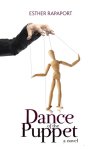 It was the weirdest feeling. For the first time, I really understood the phrase “to be someone’s puppet.”
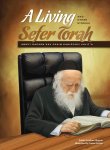 When it comes to “Torah heroes” we want our children—and ourselves—to emulate, it’s safe to assume that Rav Chaim Kanievsky shlit”a will be on everyone’s list. This is a gadol who has all of Torah right at his fingertips, a gadol who is literally a “living sefer Torah.”
 It’s the story we grew up on. At Bnos or Pirchei events, around camp bonfires, or at some lucky families’ Shabbos tables, this was the tale the dramatic storytellers would say over, each one outdoing the other with their descriptions of the evil galach and his black magic capabilities. (“’Aaabra Kadaaabra!’ he would say, and then—POOF! The person disappeared!”) If you haven’t figured it out by now, I’m referring to the amazing, legendary story of the Baal Akdamos.
 Did you ever wonder what it was like to bring bikkurim during the times of the Beis Hamikdash? We hear so much about it—the tremendous joy that permeated the entire event, the different steps to the process, the excitement and anticipation that ran high as the bikkurim-bearers joined the procession to Yerushalayim… Wouldn’t it be amazing if you, as a parent, could give over this emotion-laden account to your children so that they, too, could appreciate what the bikkurim-bringing procession was all about?
 Megillas Rus. We read it in shul every Shavuos, the yahrtzeit of Dovid Hamelech, Rus’s descendant. But who was this righteous convert named Rus? How did a former Moavite princess merit to become the wife of the Shofet Yisrael and the matriarch of the Davidic dynasty, culminating in Melech Hamashiach? Clearly, there are layers and layers of meaning behind this well-known story.
 The snowy weather may be clearing up (and not a moment too soon, right?), but when
  One of my sons has a boy named Tzion (short for Bentzion) in his class. Once I asked him, “What is Tzion’s last name?”
 “Please talk quietly in the hall—we want to make a kiddush Hashem!”
 thenextpage-israelbookshop.com